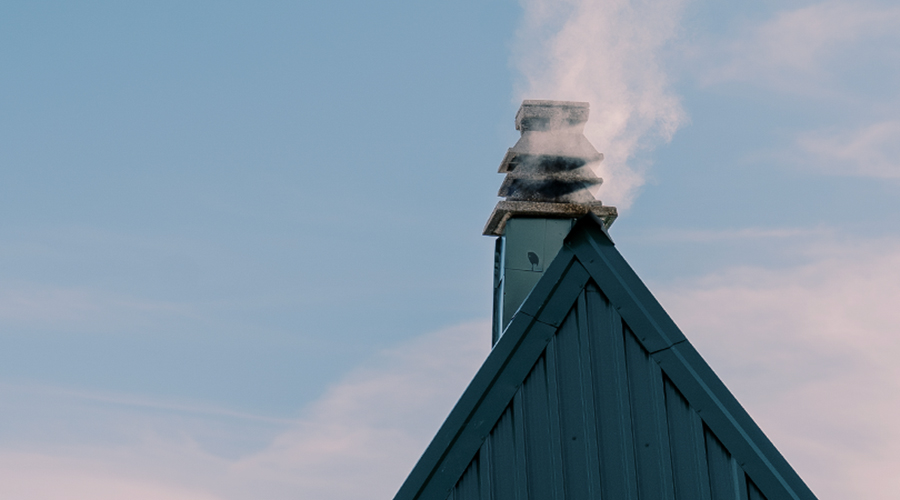
Not every house has one. And not every house uses it.
But just about everyone knows how lovely it feels to cozy up in front of the warm glow of a stone hearth. If you’re part of that lucky group of homeowners with a chimney at your disposal, it’s particularly critical to treat it with the same level of care as you do your gutters, your HVAC system or any other mission-critical element of your home.
After all, Santa’s got quite a busy December on the docket. Let’s give him a smooth ride.
1. Schedule your routine maintenance.
This is especially true if you’ve just moved into a home, and you’re unsure of your chimney’s status. Faulty flues and drafty dampers can leave your house (at worst) uninsulated and (at best) dangerous to inhabit. Creosote, a tarry wood byproduct, can build up inside your column and eventually catch fire if you’re not careful to have it cleaned over the years. A professional will know exactly where to look for it, among a number of other things better suited for the expert’s eye.
2. Look for the cracks.
Over time, your chimney’s masonry and outer surfaces could crack or deteriorate for any number of reasons: weathering, foundation shifts and simple aging can take their toll on even the strongest constructions. If you see any visible cracks, be sure to mention it to your serviceperson. Even seemingly inconsequential cracks can lead to carbon monoxide leaks.
3. Burn the good stuff.
If you have a wood-burning chimney, opt for the driest, well-seasoned wood you can get your hands on. Better wood leads to a cleaner burn, less creosote buildup, a more efficient chimney and—while not a perfect science—something closer to carbon neutrality.
4. Watch, listen and smell.
After lighting your chimney, stay vigilant for any odd odors, offputting noises or visible interior smoke. Grizzly as it may be, animals can nest their way into your chimney over the course of the year and lead to blockages that prevent it from operating correctly.
5. Get it capped.
In that same spirit, a simple chimney cap can help keep animals from scurrying down in the offseason. Similarly, it can help defend against rain, snow, leaves and other debris from making their way into the flue. Not all chimneys (especially on older houses) come with a cap, and often won’t run you much more than $50.
6. Check the flashing.
Your chimney’s flashing—the steel, copper or aluminum material that flanks your column where it exits the roof—is critical for keeping water out of your home and protecting against mold. While most flashing is built to withstand thawing cycles and precipitation, almost all forms of it have at most a few-decade lifespan. Check for rust, minor cracks or loosened paneling and make sure to get it corrected ASAP—and trust the pros for this one, too. While the DIY fix can be tempting from a cost perspective, chimney safety is too critical to leave any loose ends.